
Jason Elkins | Business Development Manager
June 22 2026 | 5 minute read
Five key considerations for running successful virtual and hybrid events
Virtual and hybrid events have become an important way for organisations to bring people together across locations, share updates at scale and minimise the disruption that comes with travel. They can maximise attendance, reduce carbon footprints and make it easier for busy teams to take part without stepping away from the day job.
But while they may look more straightforward than face-to-face events, successful delivery depends on more than just a camera and an internet connection. The best virtual and hybrid events are carefully planned, managed and designed around a clear purpose.
Here at Production bureau, we’ve been producing events for more than 35 years, including a week-long virtual summit for a global pharmaceutical brand that brought together more than 3,000 attendees from around the world – an event we successfully delivered in both 2025 and 2026. If you’re planning your own virtual or hybrid event, here are five things worth considering.
Start with the objectives
Before you think about format, platform or production, be clear about what you want to achieve. The most common mistake is to start building the experience before defining its purpose.
As Tom Cutmore, Global Account Director at Production bureau, explains: “What do you want to get out of your event? Are you sharing information, or are you running workshops? Are you looking to bring people together, internally and externally? What would you like attendees to know, do or feel? Every objective calls for a different approach to structure, pacing and interaction.”
Being clear about the objective also helps you define success. That might mean tracking registrations and attendance, measuring watch time, monitoring engagement with polls or Q&As, or looking at what happens afterwards, whether that is follow-up enquiries, downloads or actions taken. If you know what success looks like from the beginning, you can build analytics around it.
“And if it is measured,” Tom adds, “it enables you to collate the metrics for sceptical decision makers.”
Every objective calls for a different approach to structure, pacing and interaction.
Tom Cutmore, Global Account Director
Get the technology right
Production quality plays a huge part in how a virtual or hybrid event is received. If the experience feels polished, attendees are far more likely to stay engaged.
Start with visible elements. Consider how presenters will look on screen, whether the lighting is flattering and consistent, whether backgrounds feel professional, and whether slides, graphics and branded elements are working together rather than competing for attention. If speakers are joining from different locations, think about how to create a sense of consistency across all feeds. Even simple guidance around camera position, clothing and backdrop choices can make a difference.
“Every speaker should be checked-in early before going live,” adds Tom. “That gives the production team time to test feeds, check lighting and resolve any connection issues before the audience joins.”
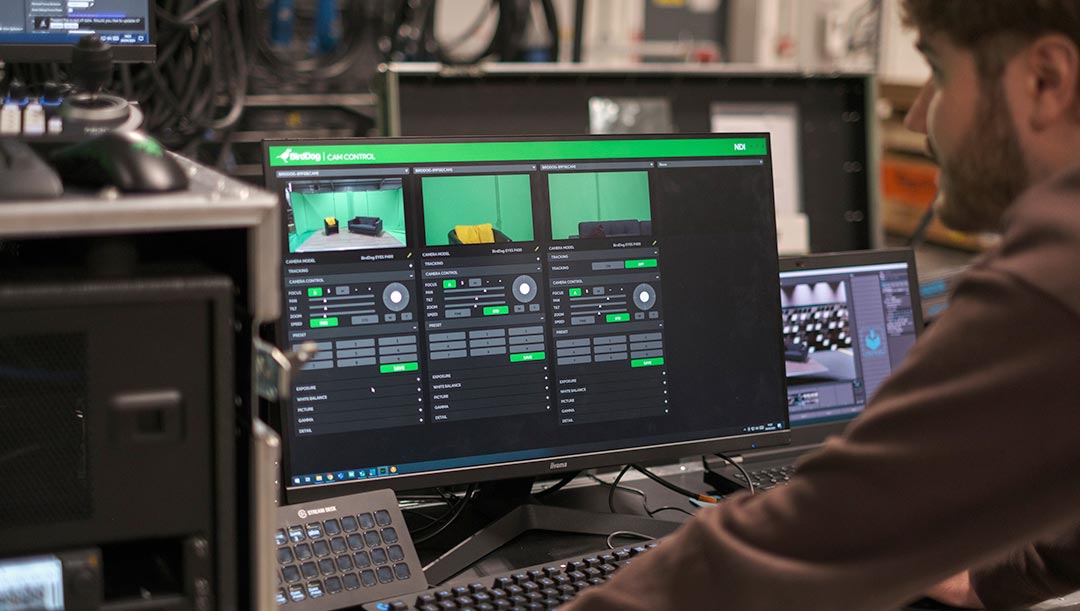
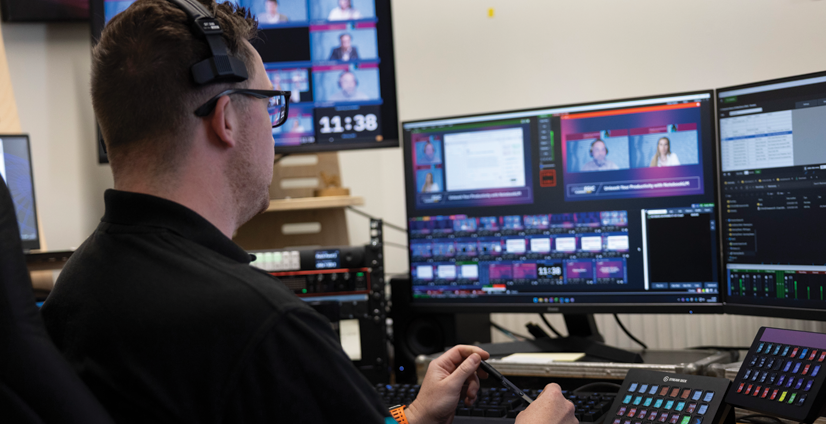
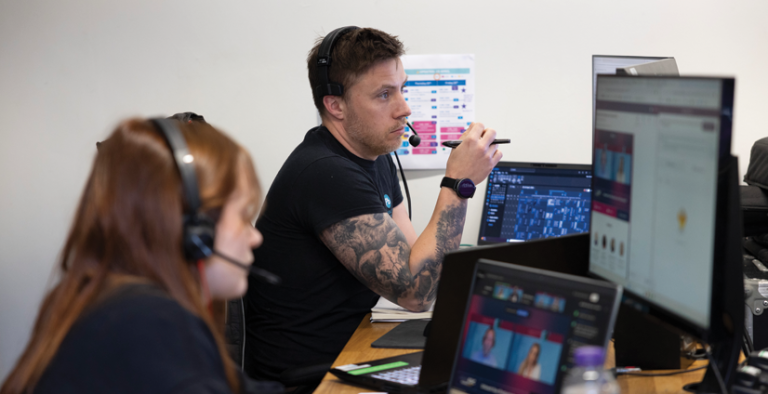
Then think about what the audience doesn’t see. Reliable streaming, dedicated high-bandwidth internet connectivity and a team that can manage multiple feeds and troubleshoot issues in real time are all essential.
It is also worth looking beyond the event itself. Recorded sessions, edited highlights and on-demand content can extend the life of the event and help those who could not attend live catch up afterwards.
Ensure the people at the live event recognise that there is an online presence. Create engagement that involves both.
Samantha Hill, Senior Event Producer
Build engagement
The most effective virtual and hybrid events are built around how the audience experiences them, not just around what the organisers want to say.
For virtual audiences, that usually means keeping sessions focused and manageable. Attention is harder to hold when people are joining from their homes and offices. Focused, well-paced sessions tend to work better than long presentations that try to cover too much.
For hybrid setups, inclusivity matters just as much as content. Online attendees shouldn’t feel like they’re watching something designed for other people. They need to feel recognised and involved. That means thinking carefully about how speakers address both audiences, how questions are taken from the room and online, and how the event creates a sense of shared participation.
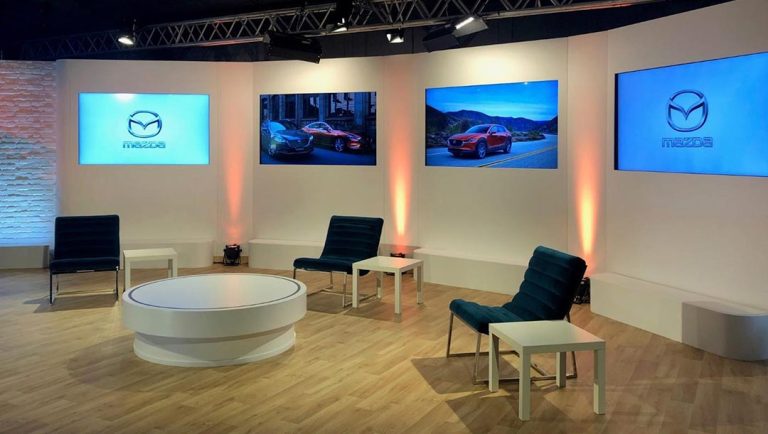
“Bringing the external audience into the room is key,” says Samantha Hill, Senior Event Producer at Production bureau. “Ensure the people at the live event recognise that there is an online presence. Create engagement that involves both.”
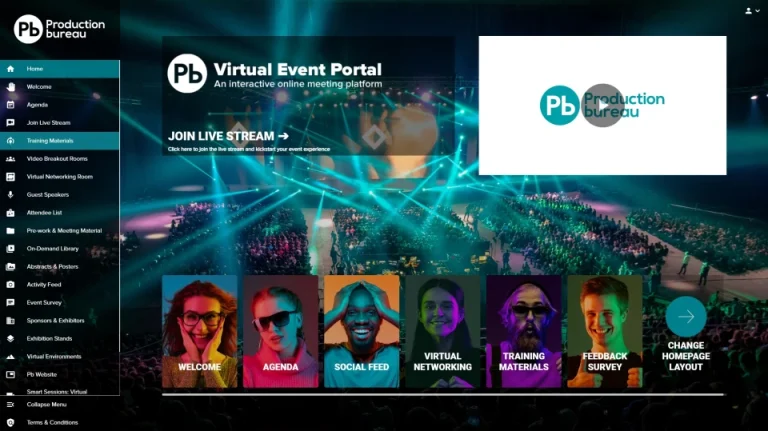
That engagement doesn’t need to be complicated. Polls, live chat and moderated Q&A sessions can work well. Some events also benefit from breakout discussions or smaller group sessions, but only if collaboration is part of the objective. Not every event needs every feature. The key is choosing the right level of interaction for the audience and the event itself.
Every speaker should be checked-in early before going live. That gives the production team time to test feeds, check lighting and resolve any connection issues before the audience joins.
Tom Cutmore, Global Account Director
Plan for every eventuality
A face-to-face event is complex enough to coordinate. Add remote participants, multiple locations and technical considerations, and the margin for error increases.
“Project management is essential,” explains David Fitzell, Head of Streaming & Broadcast. “We have a lot of meetings before we even get started with the planning, in order to agree on the production approach, event format and how we’re going to ensure consistency across the board.”
Planning needs to cover everything from speaker scheduling and session flow to content approvals, technical checks, communications and responsibilities on the day. Everyone involved should understand what’s happening, when it’s happening and who is making decisions.
Run-throughs before the big day can be particularly effective. They help presenters understand how the session will work, how they’ll be introduced and when they’ll be brought in. As a result, they build confidence because everyone knows what’s expected of them and when.
Contingency planning is vital too. A communications channel for the delivery team, a clear escalation route, pre-recorded content that can be used if needed and backup options for technical failures can make the difference between a small hiccup and a visible problem.
And remember, however well you plan, something unexpected will always happen. What matters is how you handle it.
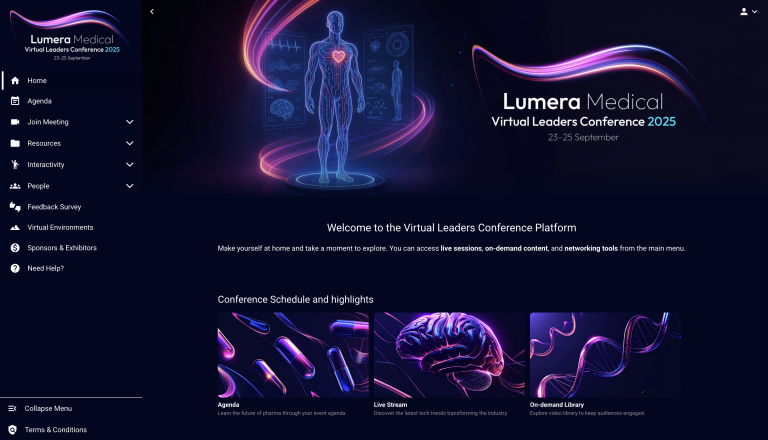
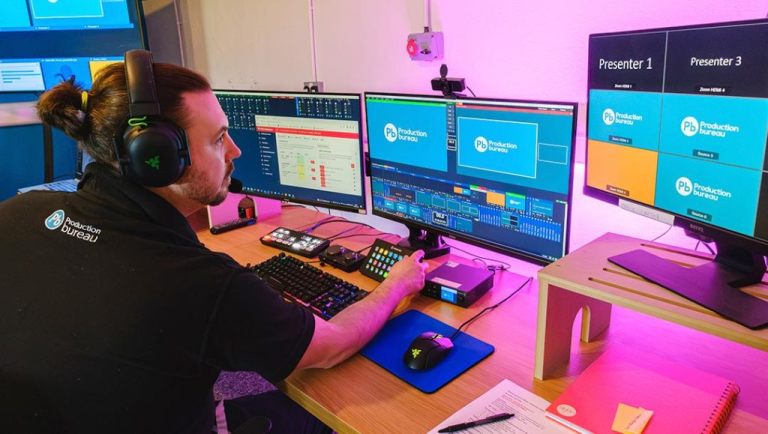
You need a team that can react instantly to whatever happens on the day.
Kate Sylvester, Senior Project Manager
Choose the right partner
Whether you’re using an internal team, an external agency or both, the people delivering the event will affect how confident you feel on the day and how successful the final result is.
A team that has managed events of similar scale and complexity before is far more likely to respond well when timings change, speakers drop out or decisions need to be made quickly. Technical capability is important, but so is judgement, communication and calmness under pressure.
“With virtual events, flexibility is essential,” says Kate Sylvester, Senior Project Manager at Production bureau. “You need a team that can react instantly to whatever happens on the day.”
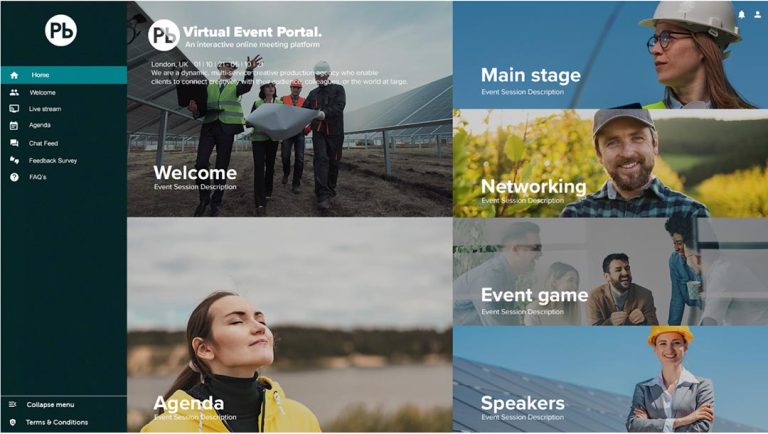
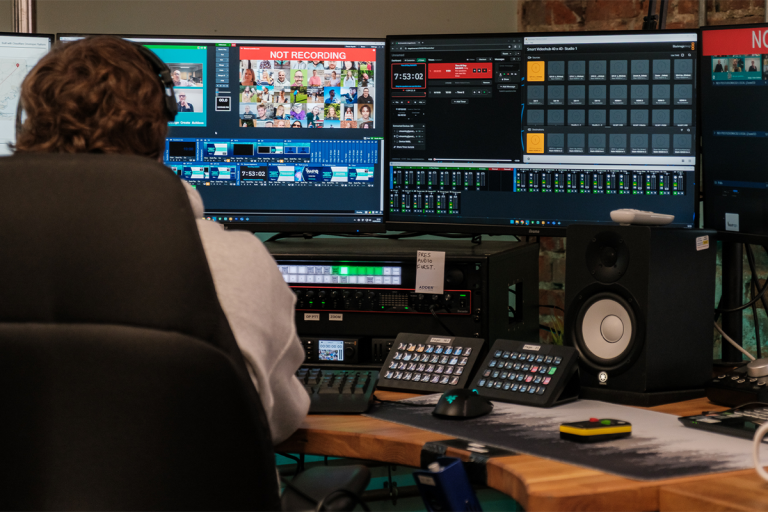
It is also worth looking at how the team is structured. When strategy, creative, and technical delivery are joined up, it’s usually easier to maintain consistency and keep decision-making clear. Where there are too many handovers or too many disconnected suppliers, things can become fragmented quickly.
A good delivery partner should do more than provide equipment or stream the event. They should help you think through the audience experience, challenge assumptions where needed and guide you towards the right solution for your objectives.
Let’s talk about your next virtual or hybrid event
At Production bureau, we’ve been producing live, virtual and hybrid events for nearly four decades, with creative, production and broadcast capabilities all under one roof. If you’re planning an event and want to talk through your plans, we’d love to hear from you.